Top 10 Sports Ankle Socks Suppliers for Global Buyers

Time:2026-09-25 Author:Aria
0%

Choosing the right supplier is not just a price exercise. For global buyers, ankle socks must perform well through training, washing, packing, and delivery. Small details matter: heel-pocket shape, toe seams, elastic recovery, cushioning, and the feel of fabric against warm skin. A sample may look convincing on a desk, then slip inside a shoe after a few hard sessions. That difference deserves attention.

This guide compares ten suppliers through practical sourcing factors, including product range, customization, quality controls, minimum order quantities, and communication. Buyers should request current specifications and test samples under realistic conditions. Supplier capabilities can change, and a polished catalog is not proof of consistent production. Fit varies. No single design suits every athlete or market.

The phrase Ankle Socks Sports points to a focused category, but it does not guarantee a particular level of support or durability. Those claims need evidence. No source articles or verified expert quotation were provided for this request, so attributing a sentence to a named specialist would risk inventing a quote. A sourced expert comment should be added only after checking its original publication or interview. That caution is not glamorous, but it makes a buyer’s guide more trustworthy.
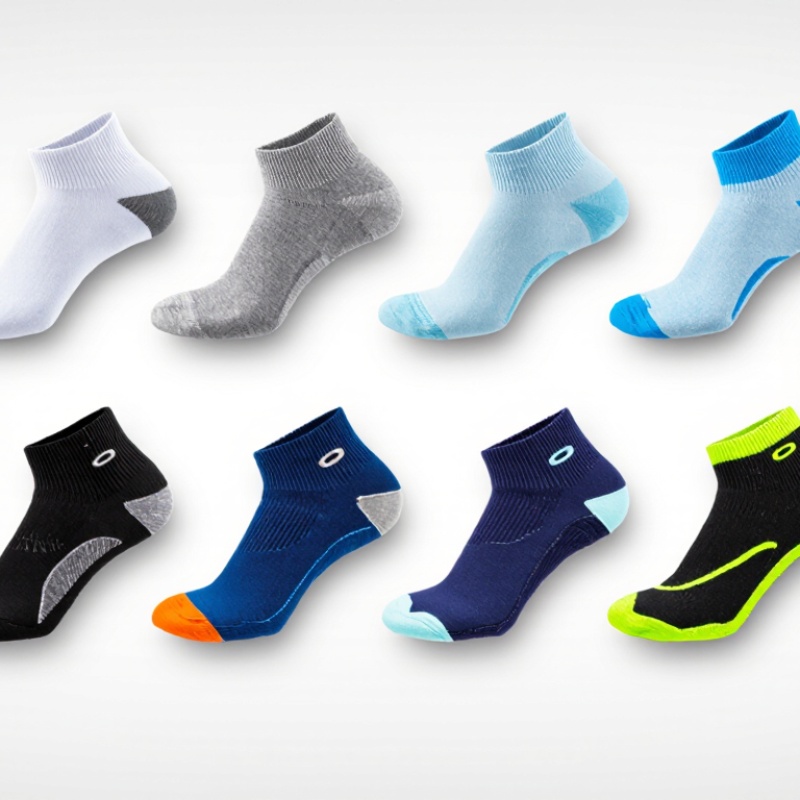
Top 10 Sports Ankle Socks Suppliers for Global Buyers

Define Sports Ankle Socks: Cut, Use Cases and the 10-Supplier Scope

Sports ankle socks sit below the ankle bone, with a low cuff that leaves most of the ankle exposed. The exact height varies by pattern, so buyers should request a measured cuff height rather than rely on labels such as “low-cut.” Common uses include running, gym training, court sports, and daily wear with athletic shoes. Cushioning under the heel and forefoot, a breathable instep, and a stable heel pocket are practical details to compare. Fit still varies.

Grand View Research’s Sports Apparel Market Size, Share & Trends Analysis Report estimated the global sports apparel market at USD 203.3 billion in 2023, with projected growth from 2024 to 2030. This broad category is not a socks-only measure, but it helps explain why buyers need clear product specifications. For a 10-supplier comparison, assess cut measurements, fiber content, cushioning zones, size range, test documentation, minimum order quantities, and lead times. A polished spec sheet can still miss real-world fit; shoe volume and foot shape matter.

Compare Product Specs: Fiber Blends, Cushioning and Construction

When comparing sports ankle sock suppliers, check the exact fiber percentages rather than relying on terms such as “performance blend.” A polyester-rich yarn can dry quickly, while nylon often adds abrasion resistance and elastane helps the cuff recover. Cotton may feel soft, but a high cotton share can hold moisture during long training sessions. Ask suppliers to confirm whether percentages apply to the whole sock or only its main body.

Cushioning should be specified by location and thickness. A terry-knit heel and forefoot can soften repeated impact, while a thinner instep may reduce bulk inside close-fitting shoes. Feel the difference. Compare sample socks after washing, since padding can flatten or shift. One detail is easy to overlook: extra cushioning may improve comfort but make a snug shoe feel tighter.

Construction affects fit and durability. Look for a smooth toe closure, reinforced heel and toe, and a cuff that stays in place without leaving deep marks. Ask how the supplier checks seam consistency and size grading across production runs. No spec sheet tells the whole story. I would also compare a worn sample with a new one; that test takes time, and results can vary between users. Requesting yarn details, construction diagrams, and care instructions makes supplier comparisons more useful.

Benchmark guide only: the entries below are anonymous product-profile examples, not verified offers or specifications from named suppliers. Confirm fiber content, construction, testing, and available options directly with each prospective supplier.
Top 10 Sports Ankle Socks Suppliers for Global Buyers — Compare Product Specs: Fiber Blends, Cushioning and Construction
Profile Fiber Blend (by weight) Cushioning Construction Typical Use Specification Checks for Buyers
Anonymous Profile 01 70% cotton, 27% polyester, 3% elastane Light terry cushioning under the forefoot and heel Ribbed arch band; reinforced heel and toe; flat toe seam Everyday training and casual sports Confirm cotton content, seam finish, shrinkage, and size tolerance
Anonymous Profile 02 60% polyester, 37% nylon, 3% elastane Light cushioning with a thin, smooth footbed Fine-gauge knit; mesh instep; elastic arch support Running in warm conditions Ask for mesh-area details, colorfastness, and moisture-management test data
Anonymous Profile 03 62% nylon, 35% polyester, 3% elastane Targeted cushioning at heel and forefoot Ventilated instep zones; reinforced heel pocket; low-profile toe seam Road running and fitness training Check cushioning-zone placement, fit grading, and abrasion resistance
Anonymous Profile 04 55% polyester, 42% cotton, 3% elastane Medium terry cushioning across the sole Half-cushioned footbed; ribbed cuff; reinforced toe and heel Gym workouts and general athletics Verify fiber labeling, sole thickness, and wash-care performance
Anonymous Profile 05 75% nylon, 22% polyester, 3% elastane Light, localized padding at high-impact areas Close-fitting knit; arch band; seamless or low-profile toe option Performance running and court training Clarify whether the toe is seamless or merely low-profile; request fit samples
Anonymous Profile 06 65% recycled polyester, 32% nylon, 3% elastane Light cushioning under the heel and forefoot Mesh ventilation panels; reinforced heel pocket; elastic arch zone Training programs with recycled-fiber requirements Request evidence for recycled-content claims and confirm the applicable chain-of-custody standard
Anonymous Profile 07 58% cotton, 39% polyester, 3% elastane Full-sole medium cushioning Plush terry sole; ribbed arch support; cushioned heel and toe Walking, gym use, and lower-impact activities Check finished sock thickness, drying expectations, and post-wash dimensions
Anonymous Profile 08 68% polyester, 29% nylon, 3% elastane Minimal cushioning for a close-to-shoe feel Lightweight knit; mesh instep; low-cut heel tab Lightweight running and warm-weather training Confirm heel-tab height, shoe coverage, and resistance to slipping during wear
Anonymous Profile 09 72% nylon, 25% polyester, 3% elastane Medium targeted cushioning at heel, forefoot, and toe Arch compression band; ventilation channels; reinforced stress zones High-mileage running and mixed training Ask how compression is defined, and request durability and fit-test results
Anonymous Profile 10 50% cotton, 47% polyester, 3% elastane Medium cushioning under the full foot Dense terry sole; breathable instep knit; reinforced heel and toe Team sports and multipurpose athletic use Verify construction consistency across sizes, seam comfort, and care-label compliance

Map Global Suppliers: OEM/ODM Services, MOQ and Production Capacity

Global buyers need more than a supplier list when sourcing sports ankle socks. They need production evidence, flexible customization, and clear export procedures. Textile Exchange’s 2024 Materials Market Report recorded global fiber production at about 124 million tonnes in 2023. Polyester represented roughly 57% of output. This matters because fiber selection affects durability, moisture control, cost, and sustainability claims.

For OEM projects, request a technical specification before discussing price. Define yarn composition, cushioning zones, arch support, size range, logo method, packaging, and color references. ODM suppliers can offer tested patterns and faster development, while OEM factories provide deeper product control. Typical MOQs may range from 500 to 5,000 pairs per design. However, lower MOQs often increase unit costs. That trade-off is easy to underestimate.

Production capacity should be verified, not merely stated. Ask for monthly output, active production lines, peak-season lead times, and recent inspection records. A practical supplier may produce 100,000 pairs monthly, yet reserve capacity for long-term contracts. Request samples from the same line used for bulk orders. Test stretch recovery, seam strength, shrinkage, and colorfastness after washing. ISO 9001-based quality systems can improve process consistency, but certification alone proves little. I would also compare at least three factories. One quotation rarely shows the full risk. Suppliers should explain whether recycled fibers, dyes, and packaging have traceable documentation. According to the International Trade Centre, apparel trade remains highly distributed across manufacturing markets, making logistics and compliance checks essential for reliable delivery.

Verify Quality: ISO 105-C06 Colorfastness Grades from 1 to 5

For sports ankle socks, colorfastness is more than a neat-looking label. Sweat, repeated washing, and friction can make a dark cuff bleed onto a pale terry sole. Ask suppliers for an ISO 105-C06 test report, not just a verbal assurance. The standard evaluates color change and staining after specified laundering procedures. Results commonly use a gray scale from 1 to 5: grade 5 indicates the least visible change or staining, while grade 1 indicates the most. Small differences matter.

Read the test conditions closely. A report should identify the washing procedure and temperature, and show separate ratings for color change and staining. A grade of 4 for color change does not automatically mean the sock also scored 4 for staining. For a buyer comparing samples, request reports for the actual yarn colors and fabric construction; a white cotton blend may behave differently from a deep-dyed polyester cuff. ISO 105-C06 is a useful benchmark, but it measures laundering performance, not every effect of sweat or long-term wear. One test cannot tell the whole story. Even so, asking for the report and checking its grades is stronger evidence than judging a sock under showroom lights.

Rank Suppliers: ASTM D4966 Abrasion Testing, Compliance and Sourcing Fit

A credible supplier ranking should weigh test evidence, compliance records, and sourcing fit—not just quoted price. ASTM D4966 uses the Martindale method to assess textile abrasion resistance, but it sets no universal pass threshold for sports socks. Ask suppliers for the laboratory, test cycles, endpoint, conditioning details, and exact fabric construction tested. Compare like with like: a cushioned heel panel may wear differently from a lightweight instep knit. Shortcuts matter.

Textile Exchange’s Materials Market Report 2024 estimates that global fiber production reached 124 million tonnes in 2023. For buyers, that scale makes clear fiber documentation and lot-level traceability practical screening criteria. Request composition records, relevant restricted-substance test results, and labeling documents for each destination market; requirements vary. Then assess minimum order quantities, lead times, and repeat-order capacity. A high abrasion result alone is not enough.

One limitation remains: flat fabric tests cannot fully recreate sweat, shoe friction, or repeated washing. Use ASTM results as one comparable data point, not a complete prediction of sock life.

FAQS

What details should buyers include in an ankle sock specification?

List yarn composition, cushioning zones, arch support, sizes, colors, logo method, and packaging. Small omissions can cause mismatched samples.

How do OEM and ODM services differ?

ODM suppliers offer existing patterns that may speed development. OEM production gives buyers more control over product details.

What is a typical minimum order quantity?

Orders may range from 500 to 5,000 pairs per design. Smaller runs can cost more per pair.

How can buyers check a supplier’s production capacity?

Ask about monthly output, active lines, peak-season lead times, and recent inspections. Request samples from the bulk-production line.

Which sample tests are useful for sports socks?

Check stretch recovery, seam strength, shrinkage, and colorfastness after washing. A quick visual check is not enough.

What should buyers request for abrasion test results?

Ask for the laboratory, test cycles, endpoint, conditioning details, and fabric construction. Compare matching sock panels where possible.

Does a strong abrasion result predict how long socks will last?

Not fully. Flat fabric tests cannot recreate sweat, shoe friction, or repeated washing. Real-world wear remains difficult to predict.

What documents can help assess materials and destination requirements?

Request fiber composition records, traceability details, relevant substance test results, and labeling documents. Requirements vary by destination.

Why compare several suppliers instead of choosing the lowest quote?

Compare at least three factories for capacity, lead times, testing evidence, and repeat-order support. One quote shows little.

Conclusion

This guide presents a practical framework for evaluating the Top 10 Sports Ankle Socks Suppliers for global buyers. It begins by defining Ankle Socks Sports products through their low-cut design, athletic applications, and suitability for training, running, fitness, and everyday activewear. Buyers can compare fiber blends such as cotton, polyester, nylon, and elastane, while also reviewing cushioning levels, arch support, ventilation, seamless toes, heel reinforcement, and overall construction.

The supplier comparison focuses on OEM and ODM capabilities, minimum order quantities, production capacity, customization options, and export experience. Quality verification includes ISO 105-C06 colorfastness testing, with performance assessed across grades 1 to 5, as well as ASTM D4966 abrasion testing for durability. By combining product specifications, compliance documentation, testing results, and sourcing flexibility, buyers can rank suppliers more objectively and select production partners that match their quality standards, order volume, target market, and long-term purchasing needs.


Aria

Aria

Aria is a dedicated marketing professional with a deep passion for innovative strategies and a keen understanding of our company's product offerings. With a wealth of experience in the industry, Aria excels at crafting engaging content that highlights the unique features and benefits of our......