Sourcing the best Sports Socks Ankle products globally requires more than comparing factory quotations. Buyers must examine fiber composition, knitting technology, testing records, labor conditions, and delivery reliability. A sock may look excellent in a product photograph, yet slip inside a running shoe after thirty minutes. That gap between appearance and performance is where sourcing decisions often fail.
Industry data supports a more disciplined approach. Textile Exchange’s Materials Market Report 2024 states that polyester represented approximately 59% of global fiber production in 2023, showing why synthetic performance fibers remain central to athletic textiles. However, material volume does not guarantee comfort or durability. Cotton blends, recycled polyester, nylon, elastane, and moisture-management finishes require different testing methods. The International Organization for Standardization provides relevant textile testing standards, including methods for colorfastness and dimensional change. Buyers should request independent laboratory results, not rely only on supplier claims. Small details matter: reinforced heel pockets, seamless toe construction, ventilation zones, and elastic compression should match the intended sport.
Global sourcing also requires supplier verification. The International Labour Organization emphasizes responsible working conditions across supply chains, while OECD due diligence guidance encourages risk-based supplier assessment and traceability. Factory visits, production samples, audit records, and batch-level inspection can reveal problems early. Still, no checklist is perfect. Audits capture one moment, not every shift.
The strongest suppliers communicate clearly when specifications fail. That honesty is valuable. A practical sourcing process compares landed cost, minimum order quantities, lead time, testing evidence, packaging, and corrective-action speed. The cheapest ankle sock is rarely the lowest-risk choice. The better choice performs consistently, protects the wearer’s foot, and remains dependable across markets.
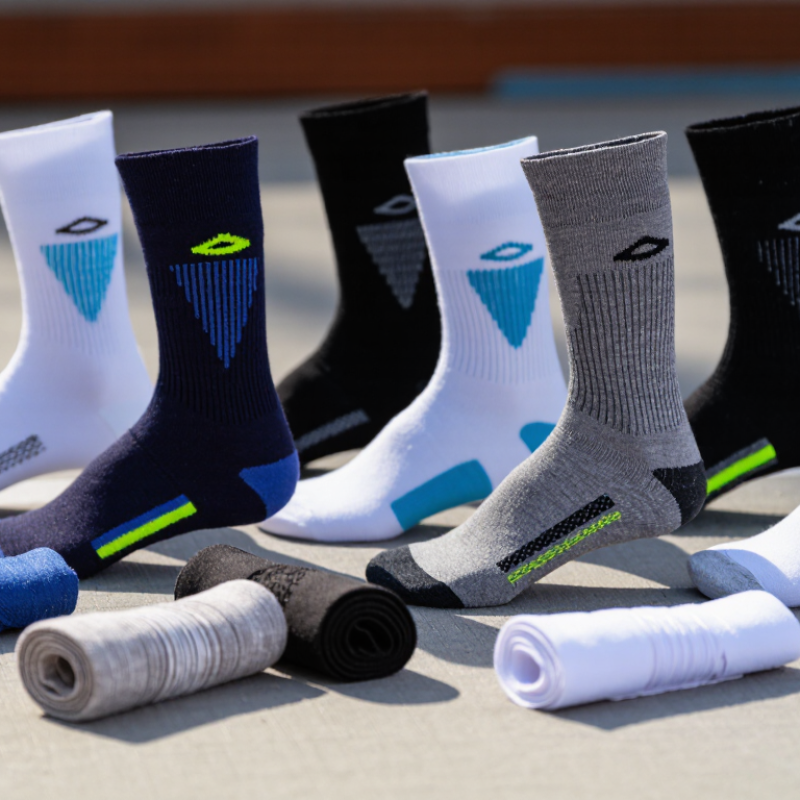
Define the Performance Requirements for Ankle Sports Socks
How to Source the Best Ankle Sports Socks Globally?
Before contacting overseas suppliers, define how the ankle sports socks must perform. A runner needs secure support, quick drying, and protection from shoe friction. A court athlete may need stronger cushioning and lateral stability. These needs are not identical. Write them down.
Measure the sock against real use. Specify fiber composition, ankle height, stretch recovery, toe-seam comfort, and washing durability. For hot training, moisture management matters more than excessive thickness. For repeated jumping, heel and forefoot cushioning deserve closer attention. Ask suppliers for fabric test reports, production samples, and clear tolerance ranges. Numbers help prevent vague promises.
Test samples with different foot shapes and training shoes. Walk, sprint, and change direction in them. Check whether the cuff slips after thirty minutes. Look for damp fabric, loose threads, or pressure marks around the toes.
In my product evaluations, a soft sample sometimes failed after several washes. That was easy to miss. It also changed the specification.
Supplier claims should be verified through independent testing when possible. Check factory quality procedures, material traceability, and consistency between sample and bulk production. A lower price can hide weaker elastic recovery or uneven stitching. Yet perfect performance on paper may feel uncomfortable in practice. Leave room for athlete feedback and revise the requirements before final sourcing.
Compare Materials, Construction, Fit, and Athletic Features
How to Source the Best Ankle Sports Socks Globally?
Material selection should match the athlete’s environment and training load.
Merino blends regulate temperature and reduce odor during long sessions. Polyester offers quick drying, while nylon improves abrasion resistance. A small amount of elastane helps the sock recover after repeated washing. Cotton feels soft, but it retains moisture and may create friction during intense activity. Request fiber percentages, colorfastness data, and wash-test results from each supplier.
Construction often separates a reliable sock from an attractive sample.
Look for a smooth toe seam, reinforced heel, and dense stitching under the forefoot. Mesh zones can improve airflow around the instep. However, oversized mesh may tear against rough footwear. I once approved a lightweight sample that felt excellent, but its heel loosened after several training cycles. That mistake showed why laboratory claims need practical wear testing. Ask testers to walk, sprint, and change direction before placing a large order.
Fit requires more than matching shoe sizes.
Measure ankle circumference, foot length, and arch support preferences across target markets. A firm cuff should stay in place without leaving deep marks. Athletic features may include blister-resistant yarns, left-right shaping, compression zones, and reflective details for low-light use. Check whether these features remain effective after washing. Compare samples from different factories under identical conditions. Keep inspection records, supplier declarations, and independent test reports. Some evaluations will disagree. Investigate the difference instead of choosing the most flattering result.
Identify Reliable Global Suppliers and Manufacturing Regions
Sourcing the best ankle sports socks starts with mapping capable regions, not chasing the lowest quotation. China offers deep knitting capacity and broad material access. Türkiye serves European buyers with shorter transit times. Italy and Portugal often provide refined finishing and smaller production runs. Vietnam and Pakistan can support competitive athletic basics, but factory-specific verification remains essential. Regional strength is only a starting point.
Use UN Comtrade HS 6115 data to compare hosiery export activity, then inspect each supplier’s actual factory. Ask for knitting-gauge details, yarn specifications, cushioning tests, shrinkage results, and colorfastness reports. A supplier should explain where knitting, dyeing, sewing, and packing occur. Textile Exchange’s Materials Market Report 2024 estimates global fiber production reached 124 million tonnes in 2023 and may reach 160 million tonnes by 2030. That growth makes traceable fiber sourcing more important. Recycled content claims still need transaction certificates or equivalent evidence. Paperwork can be incomplete.
Tips: Request samples from at least three regions. Test them after repeated washing, not only from the package. Check elastic recovery around the ankle, toe-seam comfort, ventilation, and abrasion resistance. Ask for recent social and environmental audit records. Certifications help, but they do not replace a factory visit or independent testing. I would also leave a small tolerance for production variation; identical samples do not always produce identical bulk orders. That uncomfortable gap deserves written controls.
Evaluate Quality Standards, Samples, Pricing, and Minimum Orders
How to Source the Best Ankle Sports Socks Globally?
Quality should be checked through measurable details, not attractive photographs. Request fiber composition, fabric weight, stretch recovery, colorfastness, and shrinkage results. For sports use, inspect arch support, ventilation zones, heel reinforcement, and the toe seam. A rough inner seam can cause blisters after several hours. Ask for recent laboratory reports and confirm whether testing matches your destination market’s requirements. Documents matter, but physical inspection still matters more.
Samples reveal problems that specifications may hide. Order several sizes and wash each sample at least three times. Check whether the cuff loses tension, the ankle slips, or the white fabric turns gray. I once trusted a promising sample before testing it after repeated washing. That was a costly mistake. Pricing should include sampling, packaging, freight, duties, and possible inspection fees. A low factory quote can mislead. Compare the landed cost instead.
Tips: Start with a realistic minimum order, not the supplier’s preferred quantity. Smaller trial orders reduce risk but may increase unit costs. Ask whether the minimum applies per color, size, or total order. Negotiate a mixed-size and mixed-color structure when possible. Record every agreed detail in writing, including tolerances, delivery dates, replacement terms, and payment stages. Leave room for imperfections; production can vary slightly between batches. A reliable supplier should explain those limits clearly, without avoiding difficult questions.
Manage International Sourcing, Compliance, Shipping, and Supply Risks
How to Source the Best Ankle Sports Socks Globally?
International sourcing begins with a precise product brief. Define fiber content, ankle height, cushioning, compression level, colors, and size tolerances. Request samples from several factories, not just the lowest-cost supplier. Inspect stitching around the toe and elastic recovery after repeated washing. Small errors multiply.
Compliance must be checked before production starts. Ask suppliers for material declarations, test reports, factory records, and traceable batch information. Confirm labeling rules in every target market, including fiber percentages, care instructions, country-of-origin details, and packaging requirements. Independent laboratory testing can verify colorfastness, restricted substances, and fabric performance. Documents should match the actual shipment. That assumption failed.
Shipping plans need realistic buffers. Compare air, sea, rail, and consolidated freight according to order size and delivery urgency. Calculate duties, insurance, port charges, inspection fees, and possible storage costs. Use purchase contracts with clear inspection standards, payment milestones, defect remedies, and delivery terms. Monitor production with dated photographs and pre-shipment checks. A single delayed container can disrupt seasonal promotions.
Supply risk deserves equal attention. Maintain approved backup factories and avoid relying on one yarn source. Review capacity before peak sports seasons, when lead times often expand. Currency changes, port congestion, labor shortages, and sudden material substitutions can affect margins. A practical risk register helps teams assign owners and response deadlines. It is not perfect, but it exposes weak assumptions early.
How to Source the Best Ankle Sports Socks Globally?
International sourcing performance depends on factory capability, compliance controls, shipment reliability, and supply-chain resilience. The chart compares selected sourcing and distribution markets using the World Bank’s 2023 Logistics Performance Index (LPI) overall score, which ranges from 1.0 to 5.0.
Higher LPI scores indicate stronger logistics infrastructure, shipment arrangements, tracking capability, and delivery timeliness. Use this data as one input when evaluating ankle sports sock suppliers; confirm product safety, labor, environmental, quality, and social-compliance requirements through independent audits and documentation.
Source: World Bank, Logistics Performance Index 2023, overall score. Selected markets shown for comparison.
FAQS
China offers broad knitting capacity and material access. Türkiye supports shorter European transit times. Italy and Portugal suit refined finishing and smaller runs. Vietnam and Pakistan can support competitive athletic basics. Regional strength is only a starting point.
Use hosiery export data under HS 6115 for an initial comparison. Then inspect each supplier’s actual factory. Request samples from at least three regions. Numbers help, but factory evidence matters more.
Ask for knitting gauge, yarn specifications, fabric weight, stretch recovery, and shrinkage results. Check cushioning, ventilation, abrasion resistance, and colorfastness. Request details about knitting, dyeing, sewing, and packing locations.
Order several sizes and wash every sample at least three times. Check ankle grip, arch support, toe-seam comfort, and heel reinforcement. Watch for slipping, gray discoloration, or loose cuffs. Test after washing.
Attractive photographs cannot show rough seams or weak elastic. Laboratory reports may not match your destination market’s requirements. Certifications provide useful evidence, but they do not replace physical inspection. Paperwork can be incomplete.
Compare landed cost, not only the factory quotation. Include sampling, packaging, freight, duties, inspection fees, and possible replacement costs. A low quote can become expensive later. This is easy to overlook.
Ask whether the minimum applies per color, size, or total order. Try a mixed-size and mixed-color structure when possible. Smaller trials reduce risk but may raise unit costs. Start realistically.
Record tolerances, delivery dates, payment stages, and replacement terms in writing. Leave room for slight batch differences. Identical samples may not produce identical bulk orders. That uncomfortable gap matters.
Conclusion
Sourcing the best Sports Socks Ankle products globally begins with clearly defining performance requirements, including support, breathability, moisture control, cushioning, durability, and suitability for different athletic activities. Buyers should compare fiber blends, knitting methods, ankle height, compression levels, seamless construction, and specialized features such as arch support or reinforced zones. These factors directly influence comfort, injury prevention, product lifespan, and user satisfaction.
A reliable sourcing strategy also requires evaluating manufacturers across established production regions, reviewing quality systems, requesting samples, and testing consistency before placing large orders. Buyers should compare pricing, minimum order quantities, production capacity, customization options, and lead times. International sourcing plans should include product compliance checks, accurate documentation, secure packaging, shipping coordination, inspection procedures, and contingency planning for delays or supply disruptions. Careful supplier communication and ongoing quality monitoring can help ensure that Sports Socks Ankle products meet functional expectations while remaining commercially competitive.

 MIFO
MIFO